

When referring to emeralds, to know from which country the sample comes from is a relevant feature gemological report should have. For some consumers, the name Muzo has become a world representative of quality and price retention. There is a growing need to know with more precision if the gemstones they are consuming were specific sourced. Although there are technics to separate Colombian emeralds from emeralds from other countries, not much information is available about how to differentiate emeralds

This study presents the conditions of pressure, temperature, and breccia mechanisms that allow the migration of emerald-bearing hydrothermal fluids within the emerald belts of Colombia. Based on detailed petrographic analysis, three different hydrothermal events were determined, establishing a chronological framework that enhances our understanding of geological processes in these emerald belts. The first event is characterized by the high presence of albite, due to an albitization event that altered the rock…
Gemological reports have gained a crucial role in today’s gemstone trading because they provide buyers and sellers with information regarding gem features, which in turn can be translated to monetary value. Although there is information about technics to separate Colombian emeralds from other countries, not much information is available about how to differentiate emeralds from the Western Belt (COC), and those from the Eastern Belt (COR), two main produced zones in Colombia…
The distinction between Colombian emeralds from the Western Belt (COC) and the Eastern Belt (COR), specifically from the Muzo and Chivor regions, remains underexplored despite available techniques for separating Colombian emerald material from other sources. This study addresses this gap by proposing methods to differentiate emeralds within Colombia, utilizing geological signatures as identifiers….
The Colombian emerald deposits are confined in both flanks of the eastern Cordillera. Those deposits are referred to as; the eastern emerald belt (EEB) and the western emerald belt (WEB). The formation conditions of the Colombian emeralds are unique in the world considering…
In Colombia, emerald deposits are sediment-hosted in two parallel belts (Western and Eastern Emerald Belt). Host rocks are calcareous mudstones and limestones of Lower Cretaceous age. The emerald genesis is associated to the flow and mixing of basinal and evaporate…
Colombian emeralds are widely recognized for their unique gemological and geological features; The first one involves color, which depends on the proportions of their minor and trace elements. The latter is associated with its genesis, which involves hydrothermal brine fluids…

We have analyzed 1321 samples of emerald, euclase, carbonates, micas and host rocks from the Western and Eastern emerald belts in Colombia: 738 from the Western emerald belt (WEB); and 583 from the Eastern emerald belt (EEB). Results enable trends in chemical composition to be identified…

Analyses were carried out on 514 emeralds, 439 from Colombia (15 from La Arcadia, 276 from other mines of Muzo district, 102 from other districts of the western belt and 46 from the eastern belt) and 75 from other countries, to find systematic trends or chemical composition characteristics that discriminate the Arcadia emeralds for provenance purposes. Principal Components Analysis (PCA)…

We have analyzed 1321 samples of emerald, euclase, carbonates, micas and host rocks from the Western and Eastern emerald belts in Colombia: 738 from the Western emerald belt (WEB); and 583 from the Eastern emerald belt (EEB). Results enable trends in chemical composition to be identified…
Sediment-hosted emerald deposits occur within two parallel and elongated sites (Eastern and Western Emerald Belts) along the NE trending Eastern Cordillera in Colombia. Both belts share similar features: the deposits are located in the external flanks of the Cordillera; emerald is found in hydrothermal breccias and veins hosted…
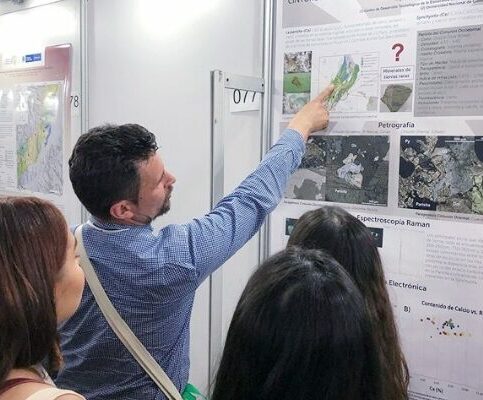
Fluorocarbonato de cerio, lantano y cerio, cristaliza en el sistema hexagonal, asociado a otros minerales del grupo de las tierras raras. Fue llamada así en honor de J.J.Paris, propietario de una mina de esmeralda en Muzo en Colombia donde fue descubierta.

Los minerales presentes en las rocas sedimentarias, son el reflejo de la configuración tectónica, la geología de las áreas fuente, la meteorización, los ambientes de depósito y los procesos diagenéticos. La composición normal del agua de mar con salinidad de 34% es: Cl-, Br-, SO4-, HCO3-, Mg++, Ca++, K+, Na+…
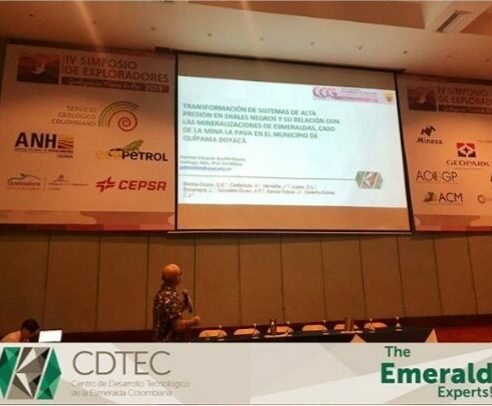
Este artículo incluye los resultados del estudio mineralógico, geoquímico y estructural de la mina de esmeraldas de La Pava. Trabajos anteriores han propuesto diferentes modelos…

La esmeralda, mineral de la especie berilo (Be3Al2Si6O18) debe su color a presencia en trazas de cromo, vanadio y hierro. Los depósitos de esmeralda se encuentran en los cinco continentes, en Colombia los depósitos se encuentran en dos franjas en la cordillera oriental conocidas como cinturones esmeraldíferos occidental y oriental. Colombia conocida como un milenario productor…

The emerald deposits are hosted in Lower Cretaceous series along two belts locatedon the external flanks of the Eastern cordillera basin, trending NE–SW. In each geological section the locations of the studied emerald mines are shown. 84 crystals of emerald were selected…
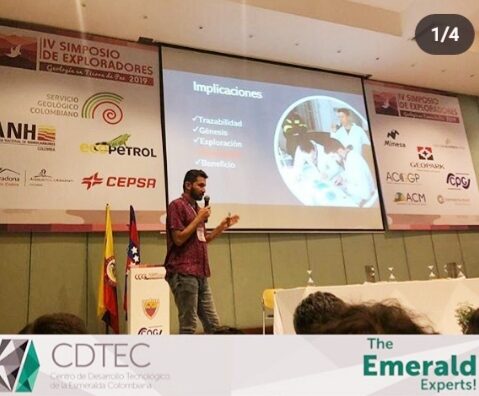
Los contenidos de elementos traza en ciertos minerales —denominados como firma o huella geoquímica— han sido objeto de numerosos estudios y se han llegado a considerar como indicadores de ambientes geotectónicos y mineralizantes. Además, una de las mayores aplicaciones de las firmas…